Know what works
for your skin
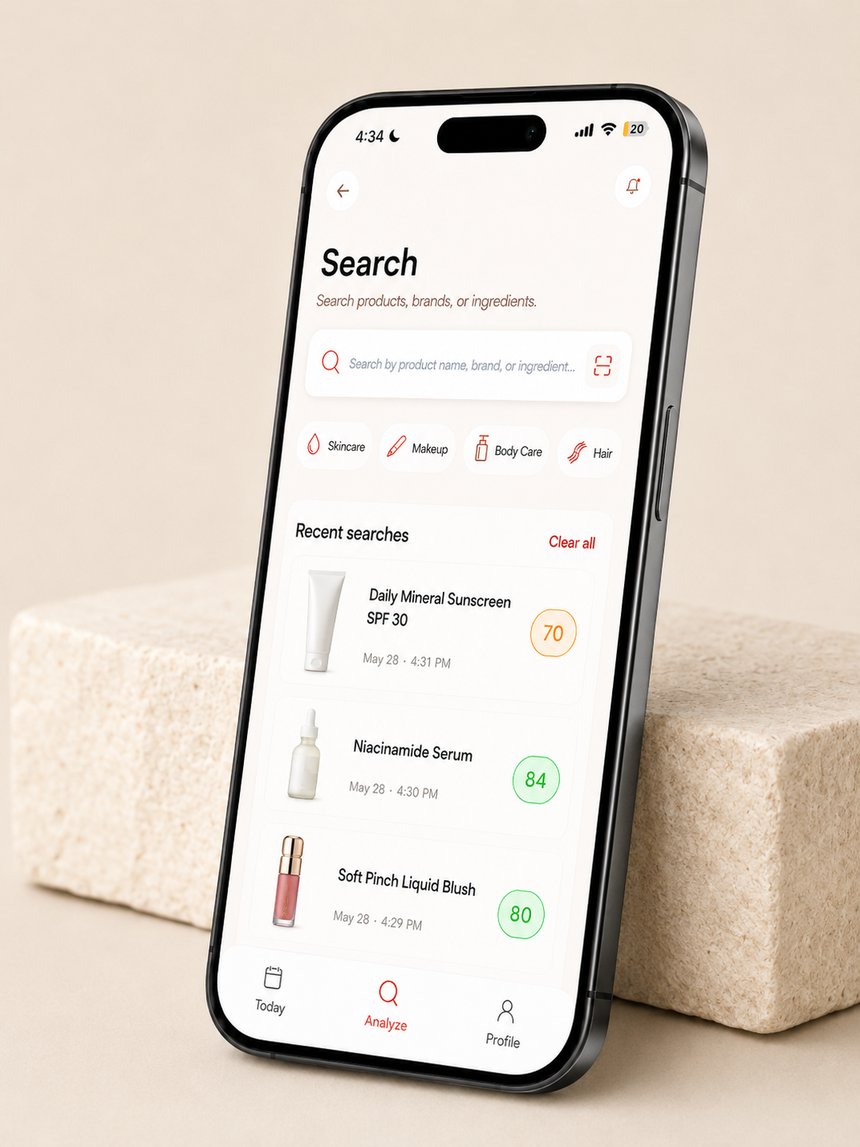
Cosnetix checks whether a product suits your skin, and shows you why.
Free on iOS and Android

Same product, different skin
A product that works for one person can set another off, because no two skins share the same barrier, oil levels, or sensitivities. Cosnetix scores every product against the skin actually using it. Try it below on a sample profile.
Pick a product
Choose a skin profile and a product to see how they score together.
Illustrative products and scores, shown to demonstrate the scoring. In the app, scores run against your own profile.
Answers before you buy
Free on iOS and Android. Answer a few questions about your skin and start checking products.
Tell us about your skin
Type, sensitivity, breakouts, concerns.
Scan or search anything
Any product, any brand, with the reasoning behind the verdict.
Add your biology
Optional. Genetic and skin microbiome testing increase the accuracy of your scores.
Watch it learn
Log what worked. Your matches sharpen each time.
Go deeper than what you can see
Every score starts from your skin profile. Add your biology and the whole catalogue gets more accurate.
Your skin's baseline, decoded
An at-home cheek swab through our partner LivingDNA, or upload DNA data you already have.
- 50,000 genetic variants tied to how skin behaves
- Sharper compatibility scores on every product you check
- Results stay yours: encrypted, never sold, deletable
Already done a genetic test with another company? Upload your file in the Cosnetix app for more personalization, free.
Buy now How to upload from 23andMe, Ancestry, or LivingDNAMeet the bacteria living on your skin
One at-home swab, sequenced in the lab, read back as a report you can actually use.
- Your bacteria named, down to the species
- How balanced your skin community is, and what it can do
- Antibiotic-resistance genes, worth knowing before your next prescription
- Your permanent baseline, and first access to microbiome-informed matching at no extra cost
Inside the Skin Microbiome Report
Skin care leans heavily on antibiotics, and resistance genes are now common on skin. Your report shows who lives on yours, how balanced they are, and what turned up. Tap through a sample.

Your most abundant bacteria
Tap any one to see what it is and why researchers pay attention to it.
Why does it matter? Some strains are associated with clear skin and others with acne, and it is one of the species researchers watch most closely for antibiotic resistance.
Why does it matter? It is studied as one of your skin's protective species, part of what keeps the ecosystem in balance and crowds out troublemakers.
Why does it matter? Its balance against other residents is an active area of skin research, and it shifts noticeably with climate and hygiene habits.
How balanced your skin community is
Diversity means how many different bacteria live on your skin and how evenly they share the space. Skin is naturally less diverse than the gut, so more is not automatically better.
We show you where you sit and we deliberately do not turn it into a health score. That kind of interpretation has to be earned with data, and we are not there yet.
What your bacteria are equipped to do
Sequencing reads genes, not just names. That means the report can also summarise the chemistry your particular community is equipped to carry out on your skin.
Antibiotic resistance genes
We look for genes associated with resistance to common antibiotic classes in the bacterial DNA collected from your skin.
Where this goes next
Your first report is a baseline. Here is what you can do with it today, and what we are building on top of it.
- Save your baseline and compare future swabs against it.
- Log what you are using so your products sit alongside your results.
- Track your skin through breakouts, sensitivity, dryness and oiliness.
- Read up on your bacteria and what the research actually says about them.
Stop guessing. Start understanding
The app is free on iOS and Android. The kit is coming, and the waitlist hears first.